
U.S. flag

An official website of the United States government

Here’s how you know

Dot gov

Official websites use .gov
A .gov website belongs to an official government organization in the United States.

Https

Secure .gov websites use HTTPS
A lock ( Lock A locked padlock ) or https:// means you’ve safely connected to the .gov website. Share sensitive information only on official, secure websites.

  • Drugs & Paraphernalia
  • Research
    • Data
    • Journal Articles
  • Publications
    • DEA Publications
    • Non-DEA Publications
  • Resources
    • Federal & National
    • State & Local
    • Practitioner's Toolbox
    • Red Ribbon Week
    • Webinars
    • Podcasts
    • Views From the Field
  • Upcoming Events
  • The Student Center
  • Search
  • Menu
Home
CDP twitter CDP facebook CDP instagram CDP linkedin CDP youtube
#deacampus CDP search Sign up for Updates CDP search
  • Menu

CDP: Main Navigation

  • Drugs & Paraphernalia
  • Research
  • Publications
  • Resources
  • Upcoming Events
  • The Student Center
  • Search
  • Menu

New to the Field? Top 5 Things to Keep in Mind

Image

Students with counselor

New to the Field?  Top 5 Things to Keep in Mind

-Joan Masters, M.Ed.
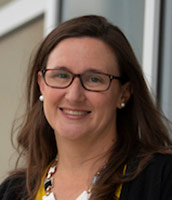
Joan MastersIt may be a bit ironic to have someone who has spent a quarter of a century in the field write something with new professionals in mind. But I think this is the perfect time in my career to do some introspection and reflect on the things I wish I had known, or more importantly, the things you should keep in mind.

Working in prevention is hard work. To change individuals, their peer groups of influence, and the environment around them, requires a high level of focus, dedication, and very thick skin. You will challenge others to think differently. Your colleagues may “just want the problem fixed.” You will also not always have the right answer. But by keeping these five important things in mind at the beginning of your prevention career, this hard work may be the most rewarding work of your professional life.

  1. Find your champions. Identify mentors to help you grow professionally and personally during your career. These mentors should be subject matter experts, champion your growth, and help you network. Other mentors can help support your overall well-being and provide a safe space. Peer mentors who are colleagues at similar stages of career growth can help hold you accountable and act as a daily sounding board.
  2. There is no silver bullet prevention strategy. In the words of my colleague, Dr. Jason Kilmer, “a mix of strategies is best.” If someone tries to sell you a prevention product that will solve all your problems, that product is about to be your biggest problem yet. Solving college student substance use concerns while our population is always changing is a bit like rebuilding a ship at sea. The reasons why students use are complex, and complex problems require complex solutions.
  3. Complex problems require complex solutions. Because our work requires complex solutions, we must consult two important public health models: the Strategic Prevention Framework to help us plan, implement, evaluate, and determine the best fit for our strategies, and the Socioecological Model to ground us to select individual, peer, and environmental strategies. Consulting evidence-based practice directories or resources, such as the National Institute on Alcohol Abuse and Alcoholism’s CollegeAIM, allow us to pick the best strategies for our campus and move away from practices that are no longer creating change in our environment. We cannot educate our problems away and policy is insufficient without individual student support strategies. Therefore, a mix of strategies is best. The resources on www.campusdrugprevention.gov, DEA’s website for professionals working to prevent drug use and misuse among college students, is a great place to start.
  4. Change on your campus is never achieved alone. Students need us and their peers for support. We need a coalition of prevention champions to collectively affect our campus environment. I subscribe to the philosophy that community engagement begins with 100 cups of coffee. By sitting down individually with our colleagues, understanding their views around substance use and student well-being, and getting to know them as people, we are much more effective when it is time to work together in a coalition.
  5. Professional development is broad and deep. Since many of us are working on substance use prevention in higher education, it is important to remember that professional development doesn’t just mean expanding prevention or public health knowledge. Many preventionists in higher education have great public health backgrounds, but lack the skills needed to implement prevention successfully, such as presentation skills, group facilitation, developing win-win relationships, and networking. These are skills we often associate with a business setting rather than a higher education setting, but in prevention, they are the skills that move us from working alone and feeling stuck, to advancing our career and facilitating behavior change for our students.

If you are new to prevention in higher education, welcome! If you are not new, thank you for your dedication to the field. It is never too late to engage more meaningfully in our work. If I could go back and give my younger self one piece of advice, it would be this: don't worry about having all the answers. Focus instead on identifying good mentors, always being curious and inquisitive, seeking out professional development opportunities, and treating people well. Twenty-five years later, I can confidently say those simple habits have mattered far more than any title or accomplishment. Your career is a journey — embrace it, keep learning, and enjoy the opportunities along the way.


Joan Masters is the Senior Project Director of Partners in Prevention and has led the organization since 2001. She is responsible for the training and technical assistance that PIP provides to the 28 member campuses and serves as the Primary Investigator for PIP’s grant projects. Joan is the author of the Fundamentals of Substance Misuse Prevention in Higher Education course for new professionals and enjoys writing and presenting on the importance of mentorship for professionals working in college health and well-being. She assists campuses with coalition building, implementing evidence-based strategies, building peer education programs, and strategic planning. Joan is a Missouri Advanced Prevention Specialist and received both her master’s and bachelor’s degrees in Education and Counseling Psychology from the University of Missouri.


  • About this site
    • Contact Us
    • Feedback
    • Disclaimer
    • Privacy Policy
  • Useful links
    • Drugs & Paraphernalia
    • Find Help
    • Get Smart About Drugs
    • Just Think Twice
  • About DEA
    • Accessibility
    • DEA: Who We Are
    • FOIA
    • Legal Policies and Disclaimers
    • U.S. Department of Justice
    • U.S. Department of Justice EEO Policy
    • U.S. Drug Enforcement Administration
    • USA.gov
Home
This is a United States Government, Drug Enforcement Administration (DEA) website. The inclusion of a link on this website does not constitute an official endorsement, guarantee, or approval by DEA.